Start with the changes you actually noticed
Write down the symptoms you want to discuss, the approximate date each began, how often it happens and how it affects your day. You can include sleep, hot flashes, mood, periods or anything else that matters to you. A concrete example such as ‘woke up three nights this week’ is easier to discuss than ‘sleep is bad’.
If your cycle has changed, include dates you know rather than guessing. Leave gaps blank. The aim is to give the clinician a useful account, not to diagnose yourself.
Add treatments, questions and context
Bring a list of medicines and supplements you currently use, including any hormone treatment and changes to it. Note what you tried and what happened, without changing a dose on the basis of a chart or app. Put your two or three most important questions at the top so they do not get lost when time is short.
The NHS recommends preparing symptom notes and questions before an appointment. ACOG also offers a symptom tracker to help people discuss their concerns with a clinician.
Make the final page easy to scan
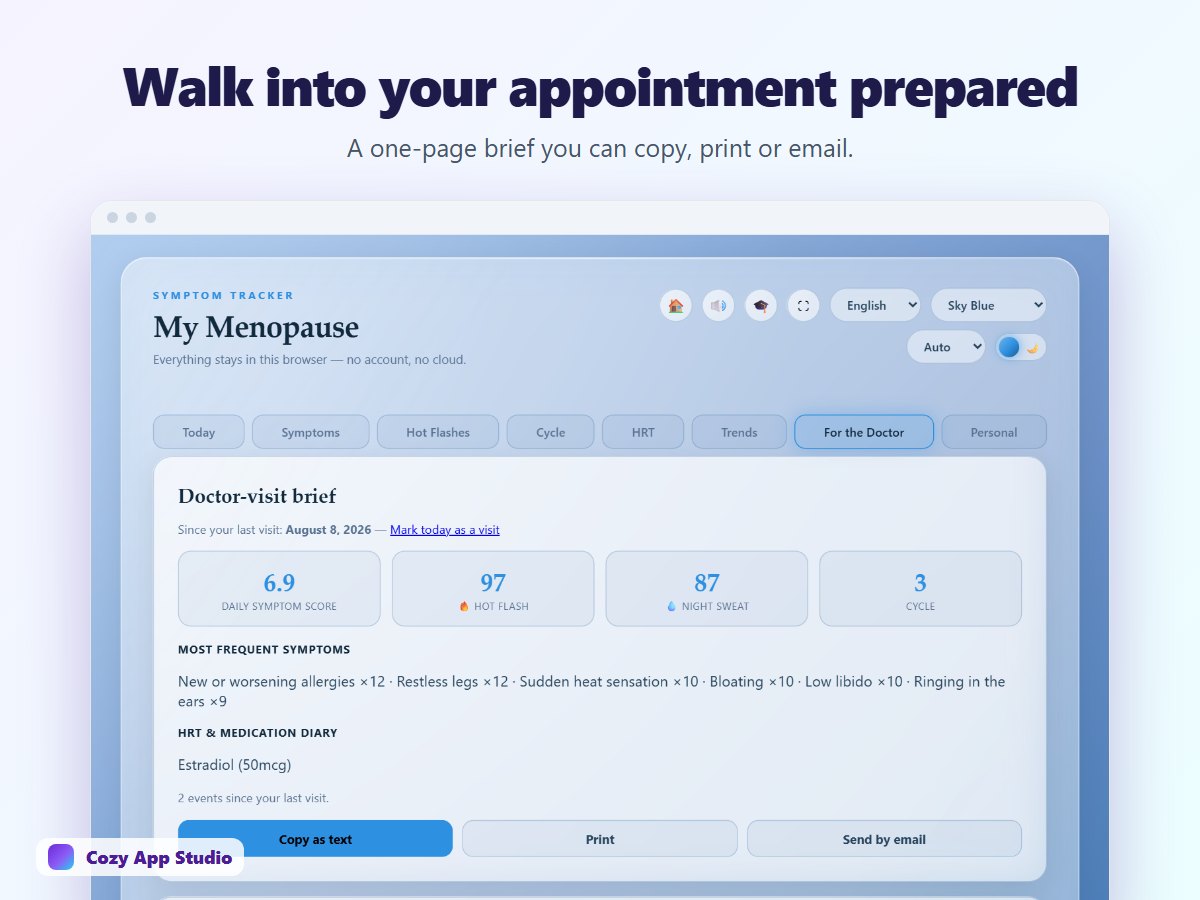
A useful one-page layout has four parts: main concerns, a brief timeline, current medicines or treatments, and questions. If you use My Menopause, its symptom diary, hot-flash counter and doctor-visit brief can gather these notes in one place. You can copy or print the brief and check it before sharing it.
The app records what you enter and shows patterns; it does not decide whether a symptom is caused by menopause or recommend treatment. If something worries you, seek advice from a qualified health professional.